
How to Spot a Commission-Driven Investment Consultant in Pakistan Before You Lose Money
A friend of mine once handed over his retirement savings to an investment consultant who came recommended by a cousin. Six months later, the fund had underperformed the market, and he found out, almost by accident, that the consultant had earned a hefty commission on that exact product. The warning signs had been there the whole time. He just didn’t know what to look for. This guide exists so you don’t repeat his mistake.
Why Trust Matters More Than Returns?
Most people spend weeks comparing mutual funds, property options, or stock picks. They spend almost no time vetting the person recommending them. That’s backwards. A bad advisor can steer you into a mediocre product wrapped in confident language, and the damage compounds for years. Wrong advice rarely feels wrong at the moment, it feels persuasive. That’s exactly the problem.
How Investment Consultants Actually Make Money?
Not all advisors are paid the same way, and the difference matters more than most clients realize.
| Compensation Model | Who Pays | Potential Conflict | Transparency |
| Fee-only | You, directly | Low | High |
| Commission-based | Product provider | High | Often low |
| Hybrid | Both | Moderate | Varies |
Commission structures include upfront payouts, trail commissions paid year after year, and bonuses tied to sales targets. None of that is illegal. But it does mean the person across the table might be optimizing for their income, not your goals.
Does Commission Automatically Mean Bad Advice?
No, and it’s worth saying clearly: plenty of commission-based advisors are honest and competent. The real issue isn’t the commission itself, it’s whether that commission is disclosed. Transparent advice tells you exactly what’s being earned and why a product was chosen. Biased advice hides that information behind vague reassurance.
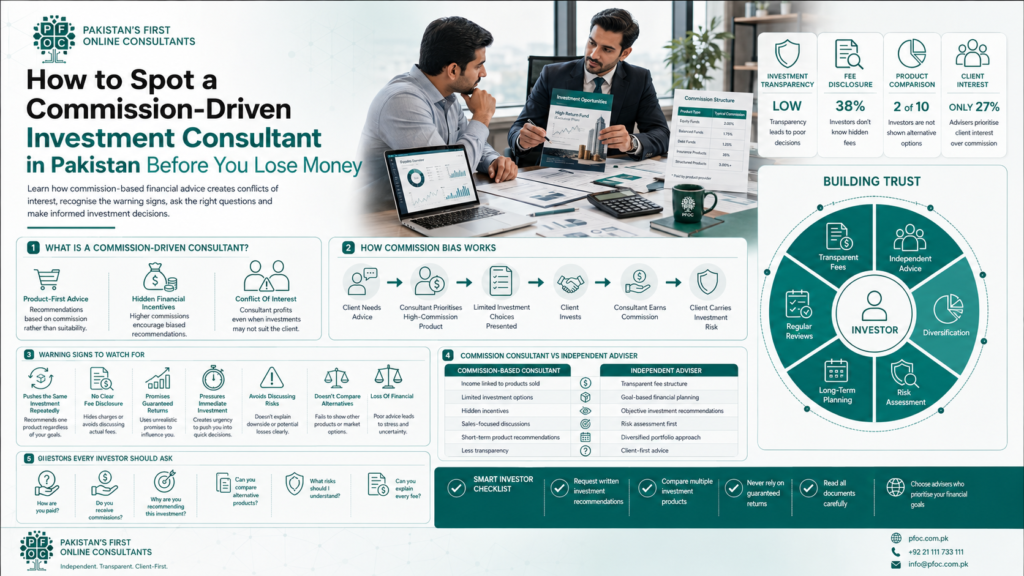
Warning Signs of a Commission-Driven Consultant
Watch for these patterns, they show up more often than you’d think.
- Guarantees high returns. No legitimate investment comes with a guarantee. Walk away.
- Pushes urgency. “This offer closes tomorrow” is a sales tactic, not a market reality.
- Avoids fee questions. If they dodge it once, ask again. If they dodge it twice, that’s your answer.
- Recommends only one option. Good advice compares alternatives; sales pitches don’t.
- Skips the risk conversation. Every investment carries risk. If nobody mentions it, that’s the risk.
- Discourages second opinions. Confident advisors welcome scrutiny.
- Won’t put it in writing. Verbal promises evaporate the moment things go wrong.
Questions Every Investor Should Ask
Before signing anything, ask directly: How are you compensated? Are their commissions, and who pays them? Why this specific investment for me? What are the risks and the alternatives? Can I get this in writing? A consultant who answers these calmly, with specifics, is worth your time. One who deflects is worth walking away from.
Psychological Tactics to Recognize
Sales pressure often works because it’s emotional, not logical. FOMO makes you fear missing a “closing window” that doesn’t really exist. Scarcity language, “only a few units left”, pushes decisions faster than they should be made. Authority bias makes people trust a confident tone over a documented track record, and “everyone is investing in this” is peer pressure dressed up as market wisdom. Recognizing the tactic often defuses it instantly.
A Real-World Scenario
A Lahore-based professional was told a specific mutual fund was “the only one worth considering right now.” No alternatives were offered, no written comparison, just urgency and a signature line. Weeks later, she discovered three comparable funds with lower fees and better five-year performance. The lesson wasn’t that the fund was fraudulent, it was that she was never shown a real choice.
Pakistan-Specific Red Flags
Local markets bring their own patterns worth watching. Housing society marketing with unrealistic rental promises, WhatsApp groups pushing “guaranteed” trading tips, unregulated referral networks, and overseas property promotions aimed at Pakistanis abroad all lean on urgency and social proof rather than substance. If an opportunity is being sold through a group chat instead of a documented prospectus, treat that as a red flag, not a shortcut.
Overseas Pakistanis Face Extra Risk
Investing from abroad means limited ability to verify anything firsthand. Family pressure to “help a relative’s business” complicates objectivity, and remote documentation makes fraud easier to hide. If you’re investing from outside Pakistan, insist on written records and independent verification before sending money, family connection isn’t due diligence.
Commission-Driven vs Independent Advisor
| Factor | Commission-Driven | Independent |
| Income source | Product provider | Client fee |
| Product range | Narrow | Broad |
| Transparency | Often limited | High |
| Client-first focus | Inconsistent | Built-in |
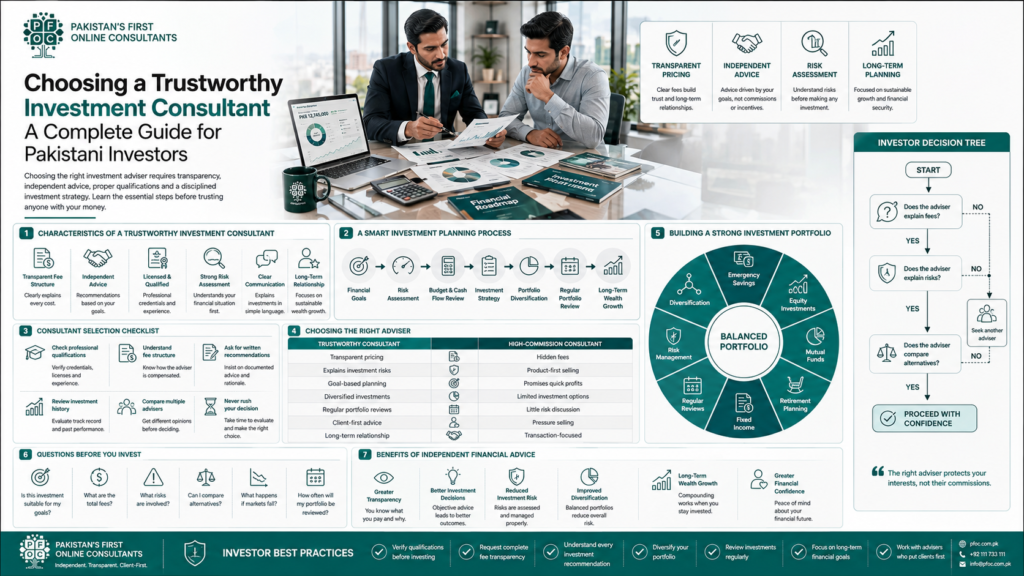
A Quick Due Diligence Checklist
- Understand all fees, upfront and ongoing
- Ask about conflicts of interest directly
- Compare at least two alternatives
- Get recommendations in writing
- Never decide under pressure
Common Myths Worth Retiring
“Free advice is always free” ignores commissions baked into the product. “High returns mean low risk” is backwards; they usually move together. “Banks always recommend the best product” assumes no institutional bias, which isn’t realistic. And “every commission-based consultant is dishonest” is just as lazy as assuming the opposite.
What Good Advice Actually Looks Like?
It starts with your goals, not their product lineup. It explains risk in plain language, documents its reasoning, and gives you time to decide instead of rushing you. Good advisors expect questions and treat them as normal, not as an inconvenience.
Frequently Asked Questions
How do I know if my investment consultant is prioritizing their commission over my goals?
Watch how the conversation starts. If they jump straight to a product recommendation before asking about your goals, timeline, or risk tolerance, that’s a sign the sale came first. A consultant working in your interest asks questions before offering answers.
Are investment consultants in Pakistan regulated, and does that guarantee honest advice?
Some are registered with regulatory bodies like the SECP, but registration confirms licensing, not ethics. A licensed consultant can still push commission-heavy products. Regulation is a starting point for verification, not a substitute for asking direct questions yourself.
What should I do if I’ve already invested through a consultant I no longer trust?
Start by requesting a full written breakdown of your current holdings, fees paid, and commissions earned to date. Then get a second opinion from an independent advisor before making any changes. Exiting an investment in a panic can cost as much as staying in a bad one, so move deliberately.
Can a commission-based consultant still be the right choice for a small investor?
Sometimes, yes, especially if fee-only advisors set high minimum account sizes that smaller investors can’t meet. What matters isn’t the payment model alone, it’s whether fees and conflicts are disclosed clearly upfront. A transparent commission-based advisor can still serve a small investor well.
How often should I review my relationship with my investment consultant?
At least once a year, and immediately after any major life change, a new job, marriage, inheritance, or relocation. Regular reviews aren’t just about performance, they’re a chance to re-ask the fee and conflict-of-interest questions, since incentive structures can shift over time.
Final Thought
The biggest investment mistake isn’t picking the wrong fund, it’s trusting advice without understanding the incentives behind it. Ask better questions, take your time, and choose the advisor who welcomes scrutiny over the one who rushes you past it.
That’s where PFOC (Pakistan’s First Online Consultants) comes in, helping you compare options and ask the right questions before you commit your money anywhere, without the sales pressure.